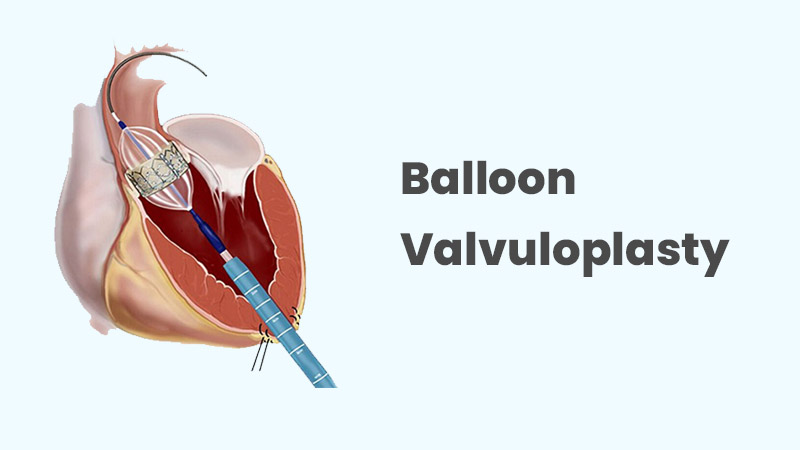
Valvuloplasty: Minimally Invasive Treatment for Heart Valve Narrowing
Valvuloplasty is a minimally invasive cardiac procedure used to treat narrowed heart valves (valve stenosis). It involves using a balloon catheter to widen the valve opening and improve blood flow.
This procedure is most commonly performed for mitral valve stenosis but can also be used for aortic, pulmonary, or tricuspid valve conditions.
Why is Valvuloplasty Needed?
Valvuloplasty is recommended when a heart valve becomes too narrow, restricting blood flow. Common conditions include:
- Mitral Valve Stenosis (often due to rheumatic heart disease)
- Aortic Valve Stenosis (in selected cases)
- Pulmonary Valve Stenosis
- Congenital valve defects
Types of Valvuloplasty
- Balloon Mitral Valvuloplasty (BMV): Most commonly performed; treats mitral valve narrowing
- Balloon Aortic Valvuloplasty (BAV): Used in selected patients; often temporary or bridge treatment
- Pulmonary Valvuloplasty: Commonly used in congenital heart disease
How is Valvuloplasty Performed?
- Local anesthesia is given
- A catheter is inserted through a blood vessel (usually groin)
- The catheter is guided to the affected heart valve
- A balloon at the tip is inflated to widen the valve
- The balloon is deflated and removed
The procedure usually takes 30–60 minutes.
Benefits of Valvuloplasty
- Minimally invasive (no open-heart surgery)
- Short hospital stay
- Faster recovery
- Immediate improvement in blood flow
- Relief from symptoms like breathlessness
Risks and Complications
Although generally safe, possible risks include:
- Bleeding at the insertion site
- Valve leakage (regurgitation)
- Infection
- Blood clots
- Need for repeat procedure or valve replacement
Recovery After Valvuloplasty
- Hospital stay: usually 1–2 days
- Resume normal activities within a few days
- Avoid heavy lifting for about a week
- Regular follow-up visits
Who is a Suitable Candidate?
Valvuloplasty is ideal for:
- Patients with moderate to severe valve stenosis
- Individuals not suitable for surgery
- Patients with rheumatic heart disease
- Selected pediatric or congenital cases
Lifestyle After Valvuloplasty
- Maintain a heart-healthy diet
- Exercise regularly
- Avoid smoking and alcohol
- Monitor blood pressure and cholesterol
- Take medications as prescribed
Our Specialist

Dr. Virender Singh Bhati
MD Physician, Clinical Cardiologist, PGDCC (SPS Apollo Hospital, Ludhiana)
Associate Consultant - Department of Cardiology, Fortis Hospital, Greater Noida