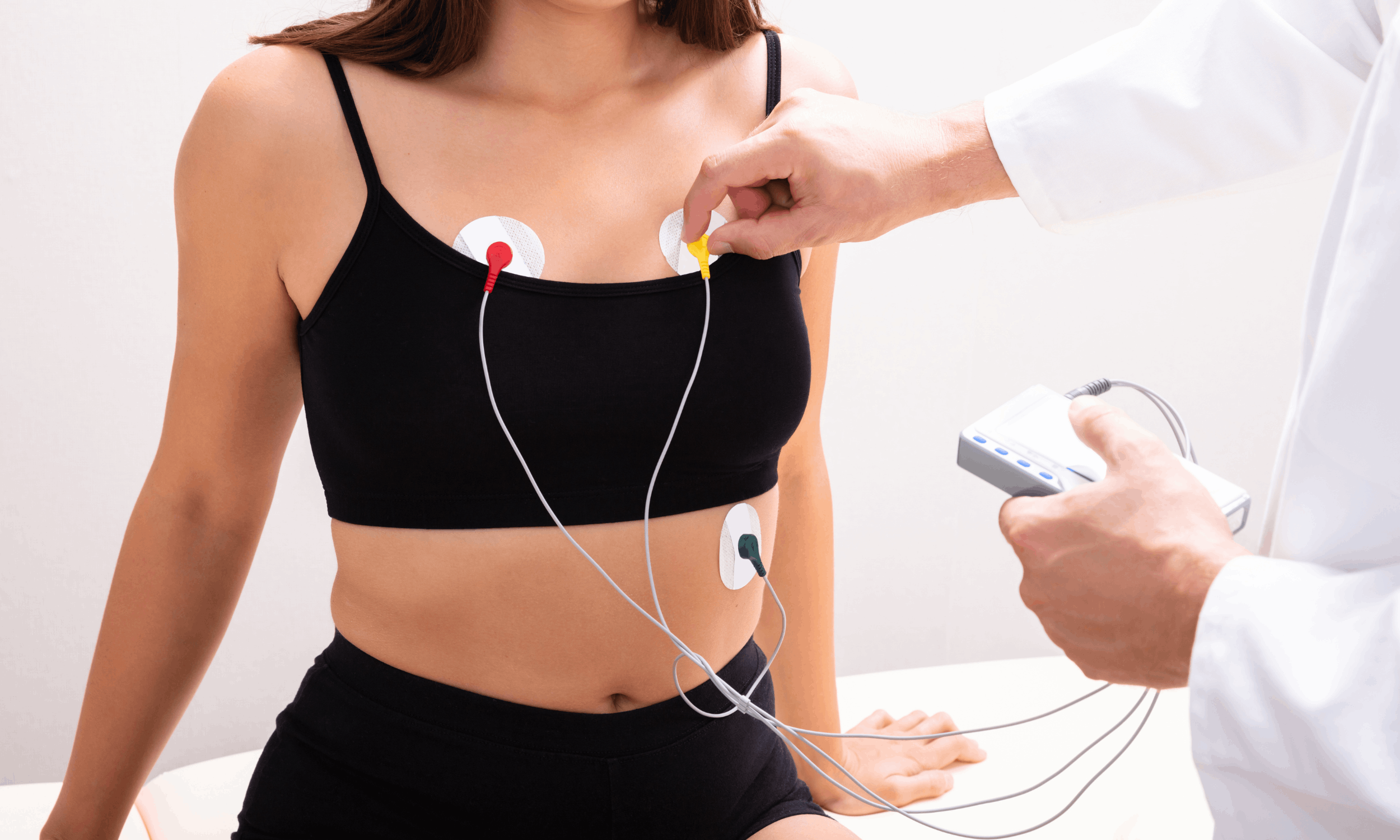
Holter Monitoring: Continuous ECG for Accurate Heart Rhythm Analysis
Holter Monitoring is a portable Electrocardiogram (ECG) test that continuously records the heart's electrical activity for 24 to 48 hours or longer. It helps detect heart rhythm abnormalities that may not appear during a standard ECG.
You carry a small device (Holter monitor) while performing your normal daily activities.
Why is Holter Monitoring Done?
Holter monitoring is recommended to:
- Detect irregular heart rhythms (arrhythmias)
- Investigate unexplained palpitations
- Evaluate dizziness or fainting episodes
- Monitor heart function after a heart attack
- Assess effectiveness of heart medications
- Check pacemaker performance
How Does a Holter Monitor Work?
- Small electrodes are attached to your chest
- These are connected to a portable recording device
- The device continuously records heart activity
- Data is later analyzed by a cardiologist
How is the Test Performed?
- Electrodes are placed on the chest
- The Holter monitor is connected and worn on a belt or strap
- You go about your normal daily routine
- You may be asked to keep a diary of symptoms
- After 24–48 hours, the device is returned for analysis
Benefits of Holter Monitoring
- Continuous heart monitoring over a longer period
- Detects intermittent or hidden arrhythmias
- Non-invasive and painless
- Helps correlate symptoms with heart activity
- Provides more detailed information than a standard ECG
Risks and Safety
Holter monitoring is very safe:
- No radiation exposure
- No electrical current enters the body
- Mild skin irritation from electrodes (rare)
When is Holter Monitoring Recommended?
Your doctor may suggest this test if you have:
- Palpitations or irregular heartbeat
- Unexplained fainting or dizziness
- Suspected arrhythmias
- Symptoms not detected in a routine ECG
- Ongoing heart condition requiring monitoring
Preparation for Holter Monitoring
- Wear loose, comfortable clothing
- Avoid bathing or swimming during monitoring
- Do not apply lotions or oils on the chest
- Follow your normal daily routine
What to Expect During the Test?
- You can walk, work, and perform daily activities
- Avoid heavy sweating or water exposure
- Record symptoms like chest pain, dizziness, or palpitations in a diary
Our Specialist

Dr. Virender Singh Bhati
MD Physician, Clinical Cardiologist, PGDCC (SPS Apollo Hospital, Ludhiana)
Associate Consultant - Department of Cardiology, Fortis Hospital, Greater Noida