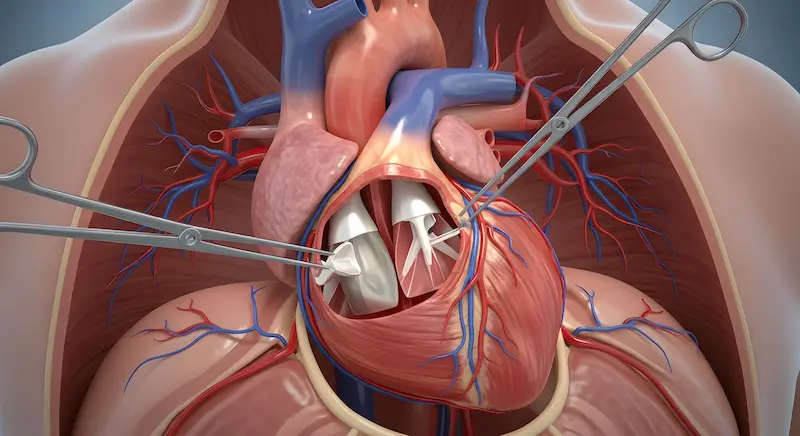
Heart Valve Repair: Procedure, Benefits, Types & Recovery
Heart Valve Repair is a surgical or minimally invasive procedure used to fix a damaged heart valve without replacing it. The goal is to restore the valve's normal function, allowing blood to flow properly through the heart.
It is often preferred over replacement because it preserves the patient's natural valve and reduces long-term complications.
Why is Heart Valve Repair Needed?
Valve repair is recommended when a heart valve becomes:
- Narrow (Stenosis) – restricting blood flow
- Leaky (Regurgitation) – allowing blood to flow backward
- Damaged due to infection or congenital defects
Common conditions treated:
- Mitral Valve Regurgitation
- Aortic Valve Disease
- Tricuspid Valve Disorders
- Rheumatic heart disease
- Infective endocarditis
Types of Heart Valve Repair Procedures
1. Annuloplasty
A ring is placed around the valve to tighten or reshape it.
2. Valve Leaflet Repair
Damaged leaflets (flaps) are reshaped or repaired.
3. Chordae Repair or Replacement
Thin cords supporting the valve are repaired or replaced.
4. Balloon Valvuloplasty
A catheter with a balloon is used to widen a narrowed valve (minimally invasive).
How is the Procedure Performed?
Heart valve repair can be done using:
Open-Heart Surgery
- Chest is opened
- Direct repair of the valve
Minimally Invasive Surgery
- Smaller incisions
- Faster recovery
Catheter-Based Techniques
- No major surgery required
- Suitable for selected patients
Benefits of Heart Valve Repair
- Preserves the natural heart valve
- Better heart function
- Lower risk of infection
- No need for lifelong blood thinners (in most cases)
- Faster recovery compared to valve replacement
- Improved long-term outcomes
Risks and Complications
Although generally safe, possible risks include:
- Bleeding
- Infection
- Blood clots
- Irregular heartbeat (arrhythmias)
- Need for future valve replacement if repair fails
Recovery After Heart Valve Repair
In Hospital:
- ICU monitoring
- Pain management
- Breathing exercises
At Home:
- Gradual return to activities
- Regular follow-up visits
- Cardiac rehabilitation
Most patients recover within 4–8 weeks, depending on the procedure type.
Lifestyle After Valve Repair
To maintain heart health:
- Eat a balanced, heart-healthy diet
- Exercise regularly
- Avoid smoking and alcohol
- Manage blood pressure, diabetes, and cholesterol
- Follow prescribed medications
Our Specialist

Dr. Dheeraj Sharma
M.B.B.S., M.S., M. Ch., 12 Gold Medals to Life-Saving Surgeries
Senior Consultant Cardiovascular surgery - Fortis Hospital, Greater Noida