Angiography (Cardiac Catheterization): Procedure, Benefits & Risks
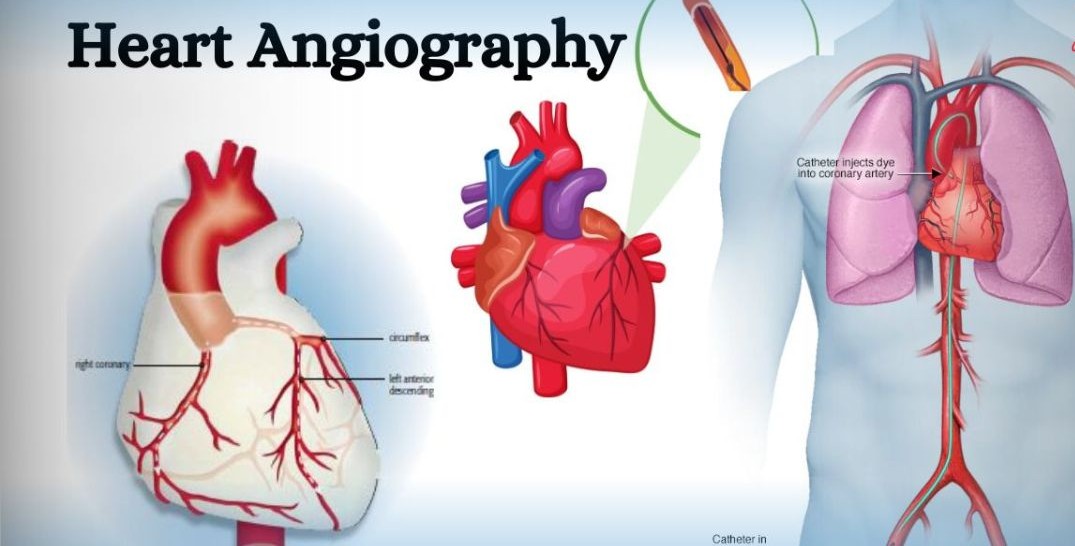
Angiography, also known as Cardiac Catheterization, is a minimally invasive diagnostic procedure used to visualize the coronary arteries (blood vessels supplying the heart).
A special dye (contrast) is injected through a catheter, and X-ray imaging is used to detect blockages, narrowing, or abnormalities in the arteries.
Why is Angiography Done?
Doctors recommend angiography to:
- Detect coronary artery disease (blockages)
- Evaluate chest pain (angina)
- Diagnose heart attack causes
- Assess blood flow to the heart
- Plan treatments like angioplasty or bypass surgery
- Check previous stents or grafts
Types of Angiography
- Coronary Angiography: Focuses on heart arteries; most common type
- Peripheral Angiography: Examines blood vessels in limbs
- Cerebral Angiography: Evaluates blood vessels in the brain
How is the Procedure Performed?
- Local anesthesia is given
- A thin tube (catheter) is inserted through the wrist (radial artery) or groin (femoral artery)
- The catheter is guided to the heart
- Contrast dye is injected into the arteries
- X-ray images are taken to visualize blood flow
The procedure usually takes 20–40 minutes.
Benefits of Angiography
- Accurate detection of artery blockages
- Minimally invasive procedure
- Quick diagnosis and immediate results
- Helps guide further treatment
- Can be combined with angioplasty if needed
Risks and Complications
Angiography is generally safe, but possible risks include:
- Bleeding or bruising at the insertion site
- Allergic reaction to contrast dye
- Infection (rare)
- Kidney issues (in high-risk patients)
- Irregular heartbeat (rare)
Recovery After Angiography
- Observation for a few hours after the procedure
- Same-day discharge in most cases
- Avoid heavy activity for 24–48 hours
- Drink plenty of fluids to flush out the dye
When is Angiography Recommended?
Your doctor may advise angiography if you have:
- Persistent chest pain
- Abnormal ECG or stress test results
- Suspected coronary artery disease
- History of heart attack
- Need for further cardiac evaluation
Preparation for Angiography
- Fasting for 4–6 hours before the procedure
- Inform your doctor about medications and allergies
- Blood tests may be required
- Arrange for someone to accompany you
Our Specialist

Dr. Virender Singh Bhati
MD Physician, Clinical Cardiologist, PGDCC (SPS Apollo Hospital, Ludhiana)
Associate Consultant - Department of Cardiology, Fortis Hospital, Greater Noida