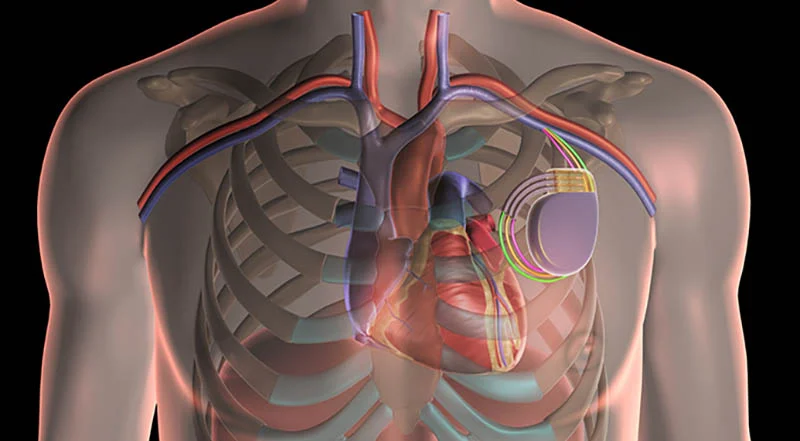
Cardiac Resynchronization Therapy (CRT): Advanced Treatment for Heart Failure
Cardiac Resynchronization Therapy (CRT) is an advanced treatment for patients with heart failure and abnormal heart rhythms. It uses a special device (similar to a pacemaker) to synchronize the contractions of the heart's ventricles, improving the heart's efficiency and pumping ability.
CRT is also known as a biventricular pacemaker.
Why is CRT Needed?
CRT is recommended for patients whose heart chambers are not beating in coordination, leading to poor blood circulation.
Common indications include:
- Moderate to severe heart failure
- Weak heart pumping (low ejection fraction)
- Bundle branch block (electrical conduction delay)
- Persistent symptoms despite medications
Types of CRT Devices
- CRT-P (Pacemaker): Synchronizes heartbeats, used in heart failure patients without high risk of sudden cardiac arrest
- CRT-D (Defibrillator): Combines CRT with a defibrillator, prevents sudden cardiac death by correcting dangerous rhythms
How Does CRT Work?
- A device is implanted under the skin in the chest
- Leads (wires) are placed in the heart chambers
- The device sends electrical signals to coordinate heart contractions
- This improves blood flow and heart efficiency
How is the Procedure Performed?
- Local anesthesia and sedation are given
- Leads are inserted through veins into the heart
- The CRT device is connected and placed under the skin
- Device settings are adjusted for optimal performance
The procedure usually takes 2–4 hours.
Benefits of Cardiac Resynchronization Therapy
- Improves heart function and efficiency
- Reduces symptoms like breathlessness and fatigue
- Enhances quality of life
- Decreases hospitalizations
- Increases survival in heart failure patients
Risks and Complications
Although generally safe, possible risks include:
- Infection at the implant site
- Bleeding or swelling
- Lead displacement
- Device malfunction (rare)
- Allergic reaction to anesthesia
Recovery After CRT Implantation
- Hospital stay: usually 1–2 days
- Resume light activities within a few days
- Avoid heavy lifting for a few weeks
- Regular follow-ups for device monitoring
Who is a Suitable Candidate?
CRT is ideal for:
- Patients with symptomatic heart failure
- Reduced ejection fraction (≤35%)
- Electrical conduction delays (e.g., bundle branch block)
- Patients not responding well to medications
Living with a CRT Device
- Maintain a healthy lifestyle
- Avoid strong magnetic fields
- Carry a device identification card
- Attend regular follow-ups
- Continue prescribed medications
Our Specialist

Dr. Virender Singh Bhati
MD Physician, Clinical Cardiologist, PGDCC (SPS Apollo Hospital, Ludhiana)
Associate Consultant - Department of Cardiology, Fortis Hospital, Greater Noida