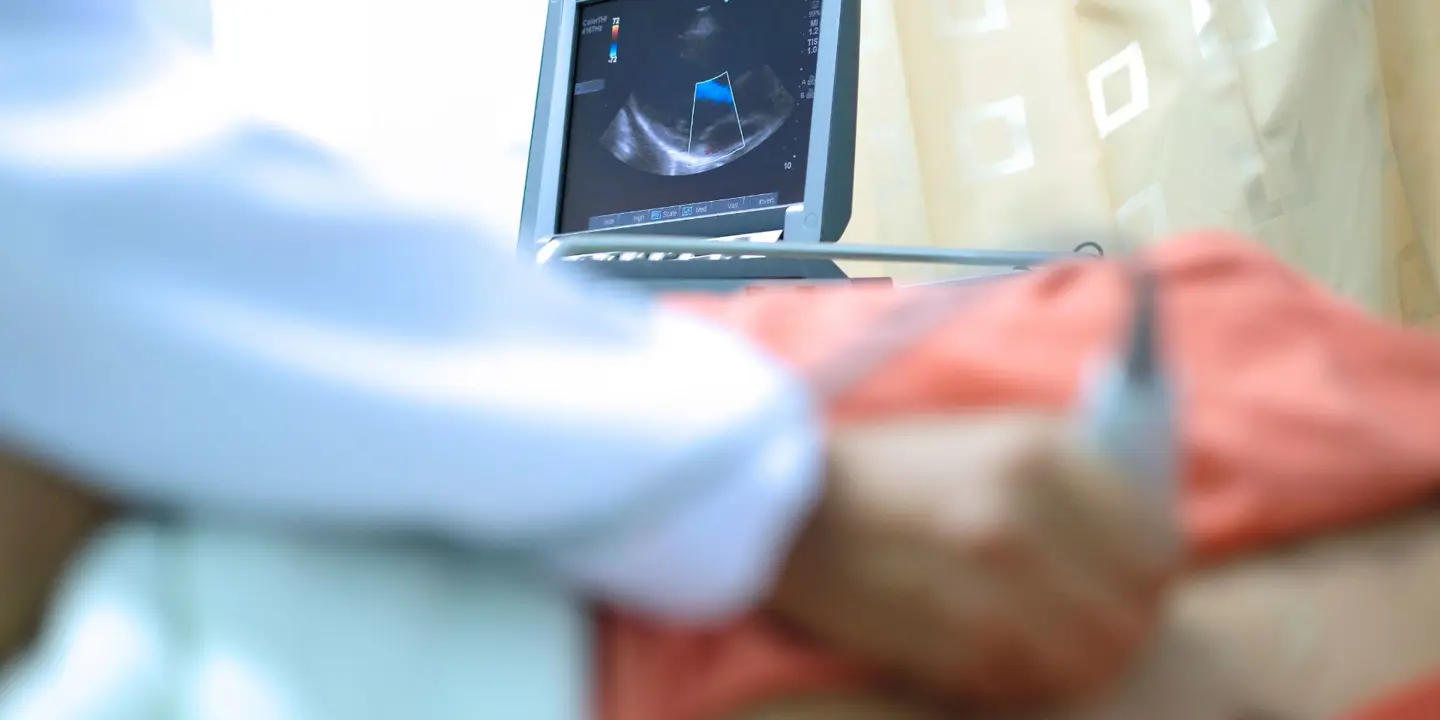
Contrast Echocardiography: Advanced Heart Imaging for Accurate Diagnosis
Contrast Echocardiography is a specialized form of echocardiography that uses a safe contrast agent (microbubble solution) injected into a vein to enhance the quality of heart images.
This advanced technique improves visualization of heart structures, especially when standard echocardiography images are unclear.
Why is Contrast Echocardiography Done?
Contrast echocardiography is recommended when detailed heart imaging is required, such as:
- Poor image quality in standard echocardiography
- Evaluation of heart chamber size and function
- Detection of blood clots inside the heart
- Identification of abnormal blood flow or shunts
- Assessment of heart muscle damage after a heart attack
- Diagnosis of congenital heart defects
How Does Contrast Echocardiography Work?
- A contrast agent containing tiny microbubbles is injected into a vein
- These microbubbles travel through the bloodstream to the heart
- Ultrasound waves reflect off the bubbles, producing clearer images
- Doctors can better visualize heart chambers and blood flow
How is the Procedure Performed?
- The patient lies comfortably on an examination table
- An IV line is inserted into a vein
- The contrast agent is injected
- A transducer (probe) is placed on the chest
- Real-time images of the heart are recorded
- The test usually takes 20–40 minutes
Benefits of Contrast Echocardiography
- Enhanced image clarity and accuracy
- Better detection of heart abnormalities
- Non-invasive and relatively quick
- Helps avoid more complex tests in some cases
- Improves diagnostic confidence
Risks and Safety
Contrast echocardiography is generally very safe:
- Contrast agents are well tolerated
- Rare allergic reactions
- Mild side effects like headache or nausea (rare)
- Performed under medical supervision
When is Contrast Echocardiography Recommended?
Your doctor may suggest it if:
- Standard echocardiography images are unclear
- There is suspicion of blood clots or tumors
- Detailed evaluation of heart function is needed
- There are suspected congenital abnormalities
Preparation for the Test
- Usually no special preparation is required
- Inform your doctor about allergies or medical conditions
- Wear comfortable clothing
Who Should Avoid It?
Contrast echocardiography may not be suitable for:
- Patients with known allergies to contrast agents
- Certain lung or heart conditions (rare cases)
- Pregnant women (only if necessary and advised by doctor)
Our Specialist

Dr. Virender Singh Bhati
MD Physician, Clinical Cardiologist, PGDCC (SPS Apollo Hospital, Ludhiana)
Associate Consultant - Department of Cardiology, Fortis Hospital, Greater Noida