Aortic Dissection: Causes, Symptoms, Types & Treatment
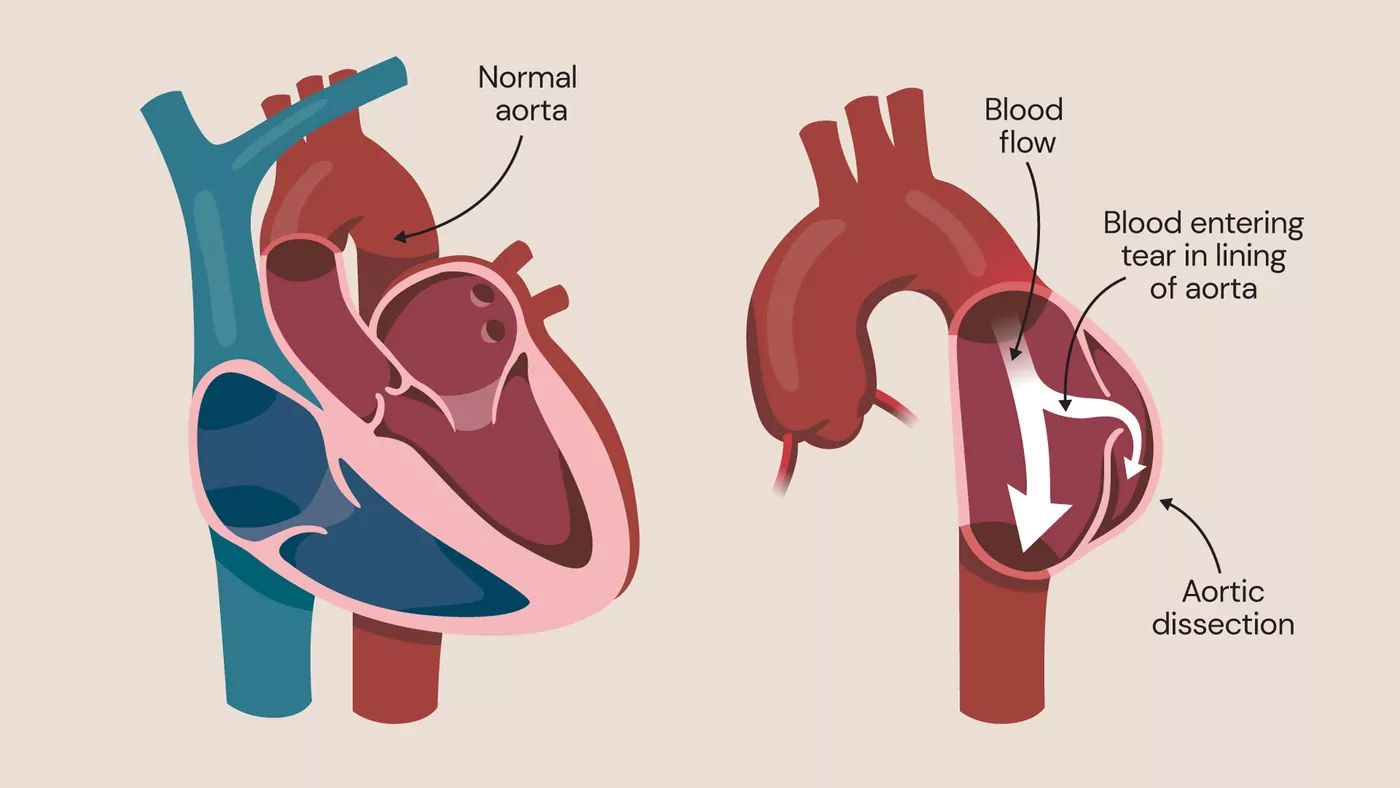
Aortic Dissection is a life-threatening condition in which a tear develops in the inner layer of the aorta (the body’s main artery). Blood flows through this tear, causing the layers of the aortic wall to separate (dissect).
If not treated immediately, it can lead to rupture, organ damage, or death.
Types of Aortic Dissection
Aortic dissections are classified based on their location:
1. Type A Dissection
- Involves the ascending aorta
- More dangerous and requires emergency surgery
2. Type B Dissection
- Involves the descending aorta
- Often managed with medications or minimally invasive procedures
Causes of Aortic Dissection
Several factors can weaken the aortic wall:
- High blood pressure (hypertension)
- Atherosclerosis (plaque buildup)
- Connective tissue disorders (e.g., Marfan syndrome)
- Trauma or injury
- Congenital heart defects
- Previous heart surgery
Risk Factors
- Age (more common in men over 60)
- Smoking
- Family history of aortic disease
- Pregnancy (rare cases)
- Uncontrolled hypertension
Symptoms of Aortic Dissection
Symptoms usually appear suddenly and require urgent attention:
- Severe, sharp chest pain (often described as “tearing” or “ripping”)
- Pain radiating to the back or abdomen
- Shortness of breath
- Fainting (syncope)
- Weak pulse in one arm or leg
- Stroke-like symptoms
How is Aortic Dissection Diagnosed?
Rapid diagnosis is critical. Doctors may use:
- CT Scan (Angiography) – Most common and accurate
- Echocardiography (TEE) – For emergency evaluation
- MRI – Detailed imaging
- Chest X-ray – Initial assessment
- Electrocardiogram (ECG) – To rule out heart attack
Treatment Options
1. Emergency Treatment
- Immediate hospitalization
- Blood pressure control with medications
2. Surgery (for Type A)
- Removal of the damaged section of the aorta
- Replacement with a synthetic graft
3. Endovascular Repair (for Type B)
- Minimally invasive procedure using a stent graft
Complications if Untreated
Aortic dissection can lead to:
- Aortic rupture
- Stroke
- Organ failure (kidneys, intestines)
- Heart failure
- Death
Recovery and Follow-Up
Recovery depends on severity and treatment:
- ICU care initially
- Lifelong blood pressure control
- Regular imaging follow-ups
- Lifestyle changes
Prevention Tips
- Control high blood pressure
- Quit smoking
- Maintain a healthy weight
- Regular heart checkups
- Manage cholesterol levels
Our Specialist

Dr. Dheeraj Sharma
M.B.B.S., M.S., M. Ch., 12 Gold Medals to Life-Saving Surgeries
Senior Consultant Cardiovascular surgery - Fortis Hospital, Greater Noida