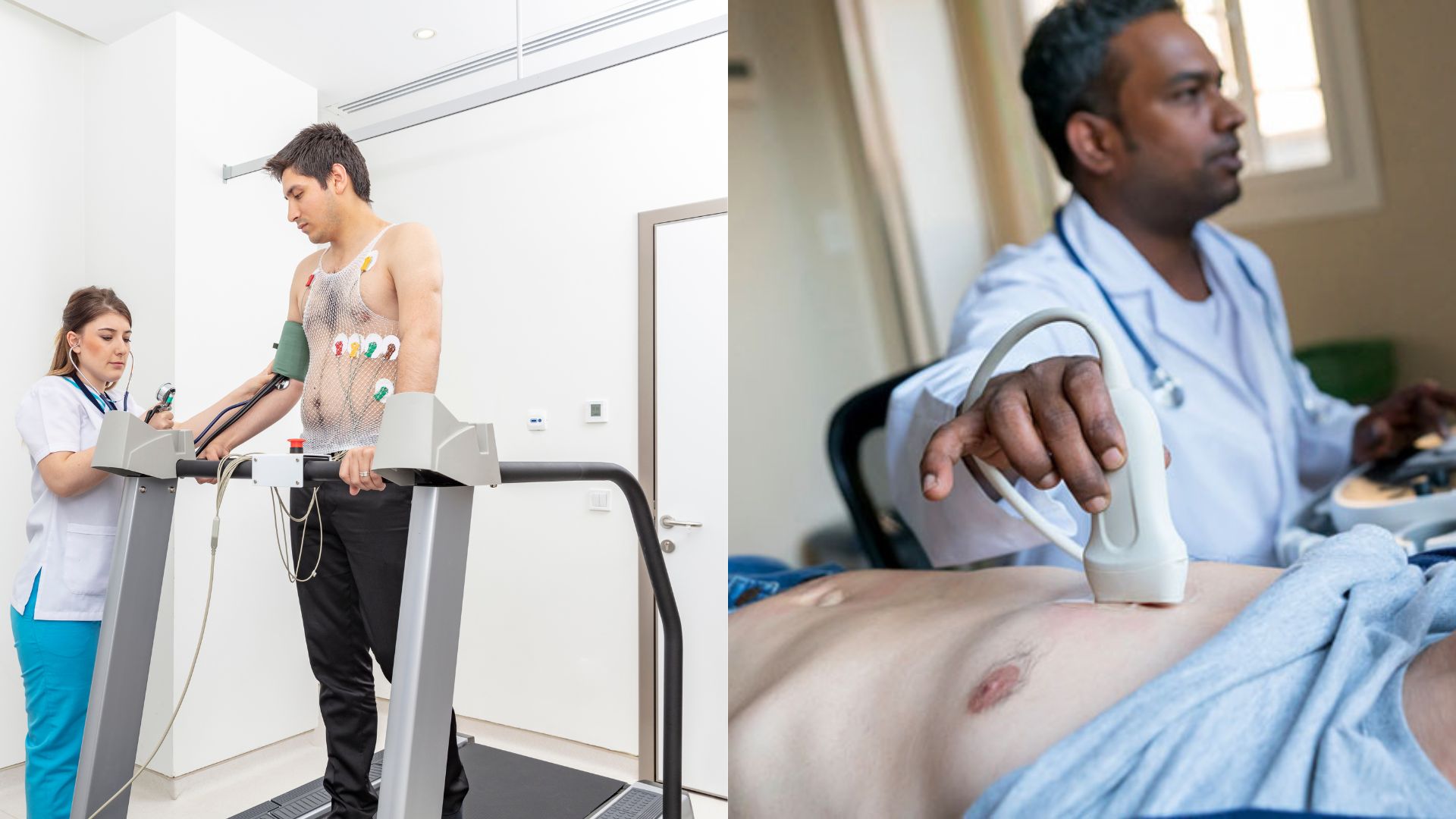
Stress Echocardiography (Stress ECHO): Detecting Heart Problems Under Stress
Stress Echocardiography (Stress ECHO) is a diagnostic test that evaluates how well your heart functions under physical stress or exertion. It combines a standard echocardiogram with exercise (or medication-induced stress) to detect problems that may not be visible when the heart is at rest.
This test is commonly used to identify coronary artery disease (blockages in heart arteries).
Why is Stress ECHO Done?
Doctors recommend Stress ECHO to:
- Detect coronary artery disease (CAD)
- Evaluate unexplained chest pain
- Assess shortness of breath during activity
- Check heart function after a heart attack
- Monitor effectiveness of cardiac treatments
- Evaluate fitness before surgery
How Does Stress ECHO Work?
- The heart is imaged at rest using ultrasound
- The patient then exercises (usually on a treadmill or cycle) or receives medication to increase heart rate
- Another echocardiogram is performed immediately after stress
- Doctors compare both images to detect abnormalities
Types of Stress Echocardiography
1. Exercise Stress ECHO
- Performed using a treadmill or bicycle
- Most commonly used
2. Pharmacological Stress ECHO
- Medication is used to mimic exercise
- Suitable for patients unable to exercise
How is the Procedure Performed?
- Baseline echocardiogram is done at rest
- Electrodes are placed to monitor heart rate
- Patient exercises or receives medication
- Heart images are taken during or immediately after stress
- Total test duration: 30–60 minutes
Benefits of Stress Echocardiography
- Detects heart problems not visible at rest
- Non-invasive and safe
- No radiation exposure
- Helps guide treatment decisions
- Provides real-time heart function assessment
Risks and Safety
Stress ECHO is generally safe, but rare risks include:
- Chest discomfort
- Irregular heartbeat
- Dizziness or fatigue
- Rare risk of heart complications (very uncommon)
The test is always conducted under medical supervision.
When is Stress ECHO Recommended?
Your doctor may suggest it if you have:
- Chest pain during activity
- Shortness of breath
- Suspected coronary artery disease
- Abnormal ECG results
- History of heart disease
Preparation for Stress ECHO
- Avoid heavy meals before the test
- Wear comfortable clothing and shoes
- Avoid caffeine (if advised)
- Inform your doctor about medications
Who Should Avoid Stress ECHO?
It may not be suitable for patients with:
- Severe heart conditions
- Uncontrolled high blood pressure
- Acute heart attack
- Serious arrhythmias
Our Specialist

Dr. Virender Singh Bhati
MD Physician, Clinical Cardiologist, PGDCC (SPS Apollo Hospital, Ludhiana)
Associate Consultant - Department of Cardiology, Fortis Hospital, Greater Noida